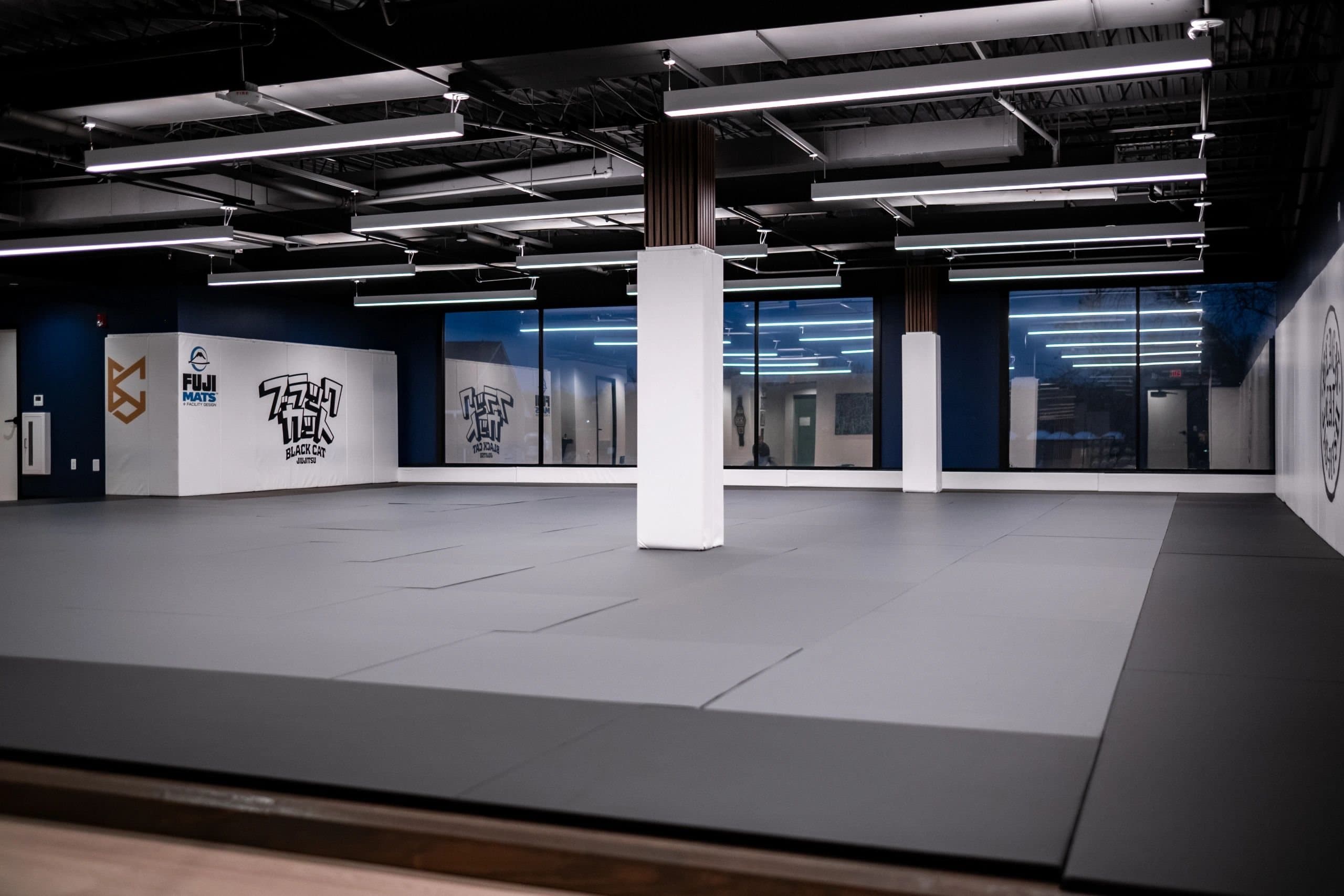
Your first month of BJJ is an introduction, not a test. Start by confirming the right class, wearing simple athletic clothing, learning how tapping works, and giving yourself time to understand unfamiliar positions. You don't need to meet a fitness benchmark or already own a gi before asking about a trial.
Request the class before you arrive
Black Cat trials run by appointment. Send a trial request, and staff will contact you to confirm the class. That conversation is also the time to ask what to wear, whether the session uses a gi, when to arrive, and what the current trial includes.
What to wear
Wear comfortable fitted workout clothing without zippers, buttons, or loose pockets. Keep your nails short, remove jewelry, and bring water. You don't need to buy a gi before requesting the trial. Staff will confirm the clothing and sort out gear from there.
Learn the safety signal first
Tapping tells a partner to stop and release. A tap can be made with your hand, foot, or voice. Use it early while learning. If a movement or pace does not feel right, stop and ask the coach before continuing.
Expect unfamiliar positions
Jiu jitsu has its own vocabulary and ways of moving. You may hear terms such as guard, mount, side control, frame, and escape before they feel natural. Your first goal is not to remember everything. It is to recognize a few positions, follow the instruction, and ask when you lose the thread.
Use the first month to learn the room
Notice how the class begins, how the coach demonstrates, how partners take turns during drills, and how questions are handled. Ask when live practice begins for a new student and how partners are selected. Get those current answers from the coach rather than assuming every academy works the same way.
What the first month may look like
Before the first visit, confirm the class and clothing. In the first class, learn how to tap and pay attention to the basic structure of the session. Over the next few visits, familiar positions and movements should become easier to recognize even when you cannot perform them yet. By the end of the month, the useful question is whether the schedule, coaching, and room make you want to keep learning.
A class may include a warmup, a coach's demonstration, partner drilling, and live practice, but the order and beginner policy can change. Ask staff for the current format instead of treating this outline as a promise.
Train at a pace you can repeat
New movement can feel tiring even for someone who already exercises. Start with a frequency that leaves room to recover and return. If pain, an injury, or a medical condition changes what you can do, get appropriate medical guidance and tell the coach what limitation applies.
Keep the first-month goal small
A useful first-month goal is simple: attend the confirmed classes, learn to tap, recognize a few positions, and become a safe drilling partner. Belt progress and winning rounds are not useful first-month measures.
What to bring
- Comfortable fitted workout clothing
- A water bottle
- Short fingernails and toenails
- Sandals for walking off the mat
- Questions about the class, clothing, or trial
How do I find beginner BJJ classes near me?
Look for a class that welcomes new students and fits your week. Ask what the first session includes, how partners are chosen, and whether it is gi or no-gi. If you are deciding between styles, read gi versus no-gi. If you are still comparing academies, use the gym-choice checklist.
Black Cat's adult program starts beginners in Intro to Jiu Jitsu at its one academy in Springfield. Check the current schedule, then request a trial class. Staff will contact you to recommend and confirm the class and practical details for your first visit.