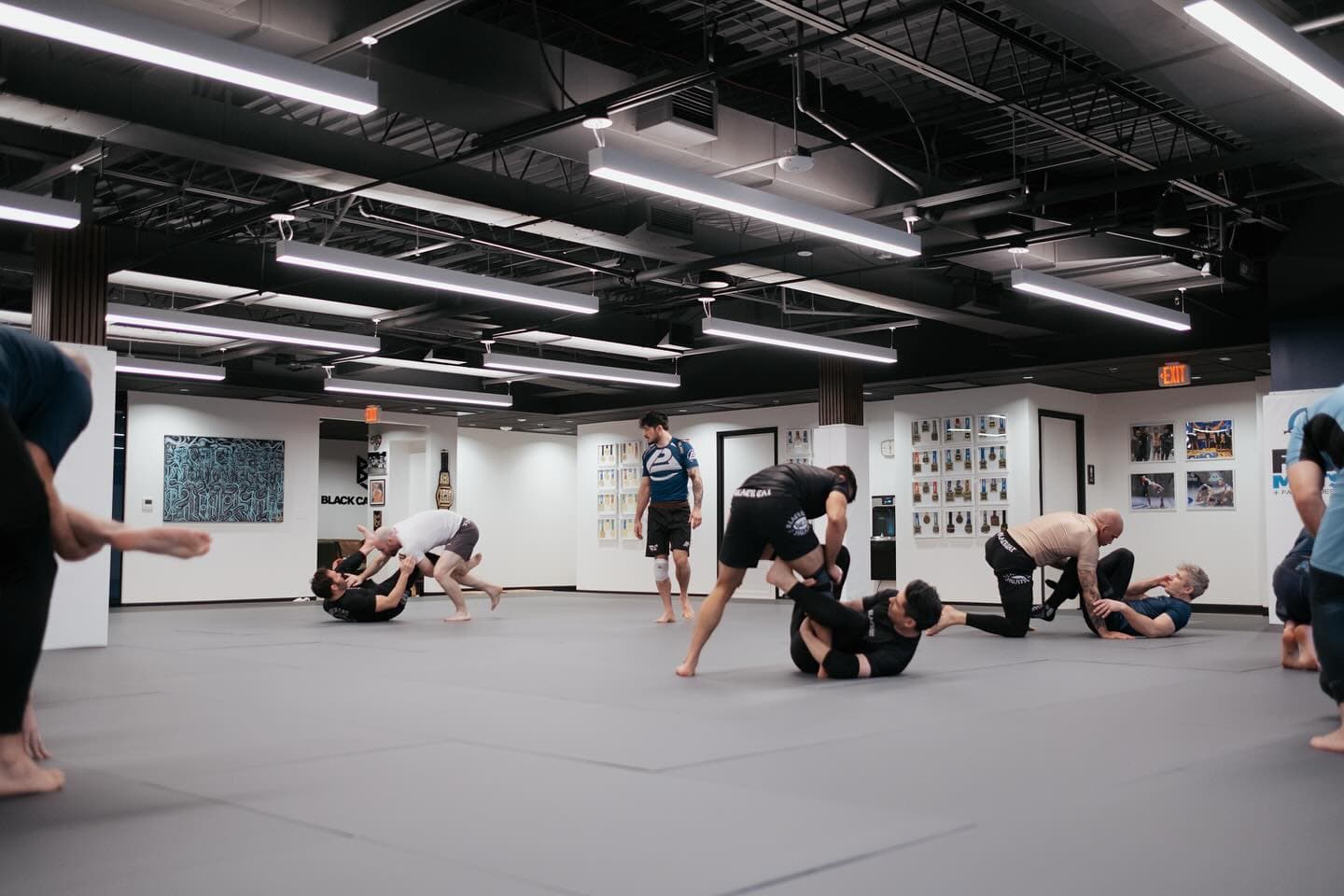
BJJ can be useful for self-defense because it gives you repeated practice controlling and escaping from a resisting partner at close range and on the ground. Its limit is just as important: a sport BJJ class does not recreate strikes, weapons, multiple attackers, hard surfaces, surprise, or the legal consequences of a real altercation.
What BJJ can train well
BJJ gives you a live problem to solve. A partner is trying to improve position while you protect yourself, escape, or regain control. That resistance can build composure and skill in clinch and ground positions in a way that cooperative drilling alone cannot.
The IBJJF rule book shows the sport boundary clearly: takedowns, positional control, guard work, and submissions matter. There are no strikes. The rules describe what sport BJJ practices. They don't prove that training guarantees an outcome outside the gym.
What BJJ does not solve by itself
BJJ does not teach you to read every threat, avoid an ambush, defend a weapon, or manage several people. Going to the ground can be a bad choice when another person can join or the surface is dangerous. Staying aware, leaving early, creating distance, and getting help remain better outcomes than winning a physical exchange.
Size, strength, athleticism, and training all matter. Technique can improve your options against a larger person, but it does not erase physical differences or make control certain.
Does sport training transfer to self-defense?
Some skills transfer because balance, pressure, grips, escapes, and a resisting body are real. Other habits need context. A sport round begins by agreement, on mats, with one partner and a referee or coach nearby. A real incident does not.
That is why the useful question is not whether BJJ works everywhere. Ask whether the class trains the positions you care about, whether beginners learn how to disengage and stand up, and whether the gym is honest about the situations it does not reproduce.
How to judge a self-defense claim
Be skeptical of guarantees. Ask what happens when strikes are possible, why a technique depends on going to the ground, and what changes when there is a weapon or another person. Look for training that allows resistance without turning every round into a test of toughness.
Partner choice and intensity matter too. You should be able to tap, stop, decline a round, and tell the coach about a limitation. Those controls make practice more useful. They do not remove the risk of a contact sport. Our guide to BJJ risk and tapping covers that boundary.
Choose the Black Cat route that fits
Black Cat teaches BJJ and wrestling, not striking or weapons training. Adults can start with the adult BJJ program, women can see the dedicated women's program, and anyone who wants more takedown practice can review the wrestling program.
If you want to see how the room handles beginners, send a trial request. Staff will call to confirm the right class and first-visit details.