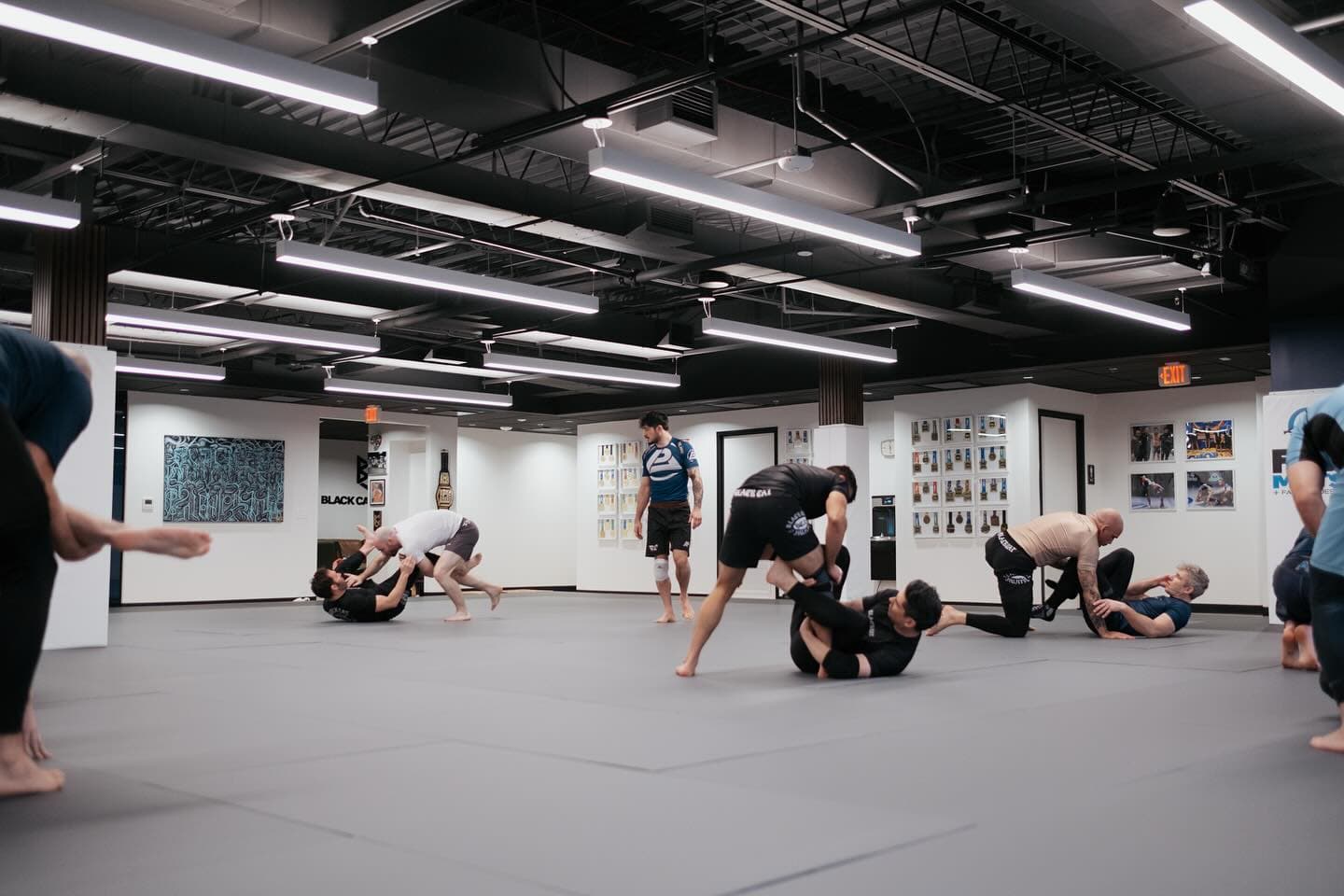
Short answer: gi and no-gi are the same art trained with and without the jacket. In the gi you wear a heavy kimono and belt, and you grip the cloth, which slows the game down and rewards patience and precise control. No-gi is shorts and a rashguard, no fabric to hold, so it is faster, slipperier, and closer to wrestling and MMA. Neither is better. For most beginners I start you in the gi because the friction gives you time to actually learn, then you add no-gi. You do not have to choose, and here is the honest version.
What actually changes between gi and no-gi
The one real difference is what you are allowed to hold. In the gi you can grab the collar, the sleeves, the pants, and the belt. Those grips are handles, and handles let you control a person precisely and hang on when you are tired. In no-gi there are no handles. You grip the body itself, underhooks, wrists, the neck, so control is more about position and pressure than about latching onto cloth.
That single change ripples through everything. The gi is stickier and more methodical. No-gi is quicker and more scrambly. Same principles underneath, different texture on top.
Gi vs no-gi at a glance
| Gi | No-Gi | |
|---|---|---|
| What you wear | Kimono jacket, pants, belt | Rashguard and fight shorts |
| Grips | The cloth: collar, sleeves, pants | The body: wrists, neck, underhooks |
| Pace | Slower, more methodical | Faster, more scrambly |
| Feels like | A patient chess match | Closer to wrestling and MMA |
| Best for learning control | Yes, the grips buy you time | Harder to slow down as a beginner |
| Sweat factor | Warmer, heavier | Cooler, lighter |
| Closest to a real fight | Anyone wearing a jacket | Anyone in a t-shirt or shirtless |
What training in the gi teaches you
The gi is where I want most people to build their base. Because you can grip the cloth, your opponent can grip yours, and everything happens a step slower. That extra half-second is a gift when you are new. You get time to see a position, think, and choose, instead of everything sliding away before your brain catches up.
The gi also forces good technique. You cannot muscle your way out of a deep collar grip the way you can slip a sweaty arm. If your escapes are sloppy, the gi punishes them and you learn to fix them. Train the gi seriously and your control, your patience, and your understanding of position all sharpen faster than they would anywhere else.
What training without the gi teaches you
No-gi is faster and it does not let you stall. With no cloth to cling to, you have to keep moving, keep your position, and finish before the scramble resets. That builds a different kind of grappler: quicker hips, better body-lock control, and a game that holds up when the other person is slippery.
No-gi is also the closest thing to how grappling shows up in mixed martial arts and in most real situations, where nobody is conveniently wearing a jacket you can grab. The leg-lock game lives more heavily here too. If your goal leans toward MMA or you just like the higher pace, no-gi will feel like home.
Which one should a beginner start with
For most adults walking in off the street, I start you in the gi. The grips slow the game down enough that you can learn the ideas properly instead of surviving a blur. Once your control and your escapes are honest in the gi, they carry straight over when you strip the jacket off, and no-gi just feels like the fast version of a game you already understand.
The one exception is what you actually want. If you are here mainly for MMA, or you know you hate being hot and heavy in a kimono, starting no-gi is fine. You will build control a little slower at first, but you will get there. The best answer for almost everyone is not either one. It is both, in the right order.
Why you do not have to choose one
Here is the part a lot of gyms will not say out loud, because many of them only run one style: the top grapplers train both. The gi makes your technique clean and your patience deep. No-gi makes you fast and hard to hold down. Each one covers the other's blind spot, which is exactly why serious players round-trip between them instead of picking a side. It is the same logic behind why grapplers cross-train wrestling, which we break down in BJJ versus wrestling.
You do not need two memberships or two gyms to get that. At Black Cat, one membership covers gi and no-gi both, so you can build your base in the jacket and sharpen your speed without it, on the same mats, with the same coaches.
What to wear to your first class
You do not need to buy anything to try jiu jitsu. For your first gi class, we can usually loan you a kimono, so just bring shorts and a t-shirt to wear underneath and come clean and barefoot. For no-gi, wear athletic shorts without pockets or zippers and a fitted t-shirt or a rashguard. That is it. Once you decide to keep training, you pick up your own gi and a rashguard, and we will point you to what actually holds up. If you want the full first-timer picture, read our honest take on whether BJJ is good for self-defense, which covers a lot of what a new person is really wondering.
How Black Cat runs gi and no-gi under one membership
Most academies make you pick a lane or pay twice. We do not. One Black Cat membership covers gi jiu jitsu, no-gi, wrestling, and our women's program, all taught by coaches who still compete. I run the mat as a second-degree black belt and multiple-time IBJJF champion who corners professional fights in the UFC, ONE FC, and FURY FC, and I teach most of the classes myself. Beginners start with the fundamentals in the gi and add no-gi when they are ready.
You can train in Springfield and the surrounding Northern Virginia towns without driving across the county. If you are completely new, here is exactly what your first month of BJJ looks like. The fastest way to feel the difference between gi and no-gi is to get on the mat and try both. Book a free trial class, tell us it is your first time, and we will start you at the beginning.
Should a beginner start with gi or no-gi?
For most adults, start in the gi. The cloth grips slow the game down, so you get time to learn control and escapes properly. Those skills carry straight over to no-gi later. The exception is if you are here mainly for MMA or dislike training hot and heavy, in which case starting no-gi is fine.
Is no-gi harder than gi?
Not harder, just faster. Without the jacket there is nothing to grip, so positions slip away quicker and you cannot stall. Beginners often find the gi easier to learn in because it buys time, while experienced grapplers love no-gi for its speed. Most people end up training both.
Do I need to buy a gi to start?
No. For a first gi class we can usually loan you a kimono, so just bring shorts and a t-shirt to wear underneath. For no-gi, wear athletic shorts and a fitted shirt or rashguard. Buy your own gear once you decide to keep training.
Can I train both gi and no-gi at Black Cat?
Yes. One membership covers gi jiu jitsu, no-gi, wrestling, and the women's program, all on the same mats with coaches who compete. You build your base in the gi and add no-gi when you are ready, which is how you become a complete grappler instead of half of one.
