Short answer: judge a BJJ gym by who is actually on the mat coaching, not by the logo on the wall. Watch a class or take a trial before you pay anything. The green flags are a real black belt teaching in person, small enough classes that you get corrected, partners who control themselves with a beginner, and a schedule that fits your week. The red flags are a head coach who never teaches, ego rolling that hurts new people, long contracts pushed hard, and vague answers about who holds what belt. Here is the honest checklist from someone who runs a gym.
The one thing that matters most: who is actually on the mat
Everything else on this list is secondary to this. The single biggest factor in whether you get good and enjoy it is the quality of the coaching you personally receive, week after week. A famous name on the sign means nothing if that person is never in the room.
So the first question is simple. Who teaches the classes I would actually attend, and what is their rank? At a lot of gyms the owner is a black belt who shows up for photos, and a blue or purple belt runs the day-to-day. That can still be fine, but you deserve to know before you sign. At my academy I teach most of the classes myself and trained the staff who cover the rest, and I think that is the standard to hold any gym to.
Check the head instructor's belt and where it came from
BJJ rank is not handed out on a schedule. A black belt takes roughly a decade of honest training, and who promoted someone tells you a lot about the quality behind the belt. It is a fair thing to ask, and a good coach will answer it happily.
You are looking for a verifiable lineage, a real competition or coaching record, and a coach who can explain why a technique works, not just show it. You do not need a world champion. You need someone who is clearly better than everyone in the room and can teach. Be a little wary of a gym that gets vague or defensive when you ask a straightforward question about rank.
Green flags and red flags on a trial class
Never sign up off a website. Take a trial or at minimum watch a full class, because thirty minutes of watching tells you more than any amount of marketing. Here is what to look for once you are in the door.
| What you see | Green flag | Red flag |
|---|---|---|
| The head coach | Teaching the class in person, correcting people by name | Absent, or watching from an office while a junior runs it |
| How beginners are treated | Paired with someone who drills light and protects them | Thrown straight into hard live rounds on day one |
| The rolling culture | Controlled, technical, people tapping early and resetting | Spazzy, injury-prone, egos cranking submissions on new folks |
| The room | Clean mats, clear air, people who say hello | Smelly mats, cliquey, nobody acknowledges a visitor |
| The sales pitch | Come train, see if you like it, then decide | A long contract pushed hard before you have even sweated |
Trust how the room feels as much as the checklist. You are going to spend hours a week here with your body in close contact with these people. If it feels welcoming and controlled, that is most of the battle. For a full walk-through of the early weeks so you know what normal looks like, read what your first month of jiu jitsu actually looks like.
What class size and mat space actually tell you
Bigger is not better. A packed class where forty people share one coach means you get seen once an hour, if that. A smaller class where the instructor can watch you drill and fix your grip on the spot is where you improve fast.
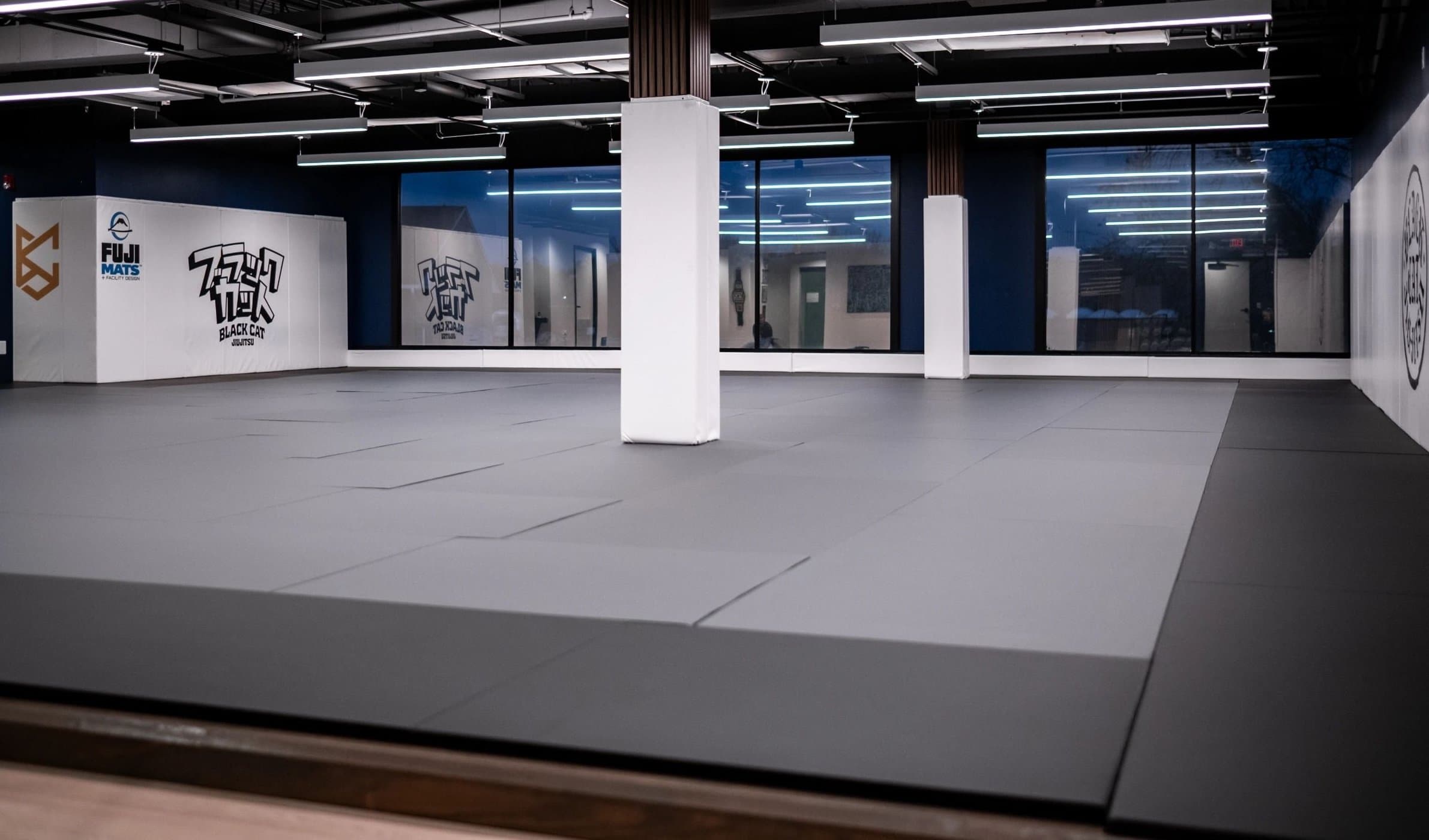
Mat space matters for safety more than for prestige. Enough room that people are not colliding mid-round is what you want. When you visit, count how many students there are per coach on the mat, and picture yourself as the newest person in that ratio. That number predicts your first six months better than the size of the building.
Technique culture versus ego culture
This is the difference that separates gyms that keep people for years from gyms that chew through beginners. In a technique-first room, live rolling is treated as practice. People flow, they let go of submissions, they help partners learn, and getting tapped is information, not a loss.
In an ego room, every roll is a fight to win and a new person is a target to prove something on. That culture gets people hurt and it drives away exactly the beginners a healthy gym is built to develop. You can read it in about one round of watching: are the higher belts protecting the lower belts, or hunting them? A coach sets that tone, and it is the thing I protect hardest in my own room.
Does the gym teach gi, no-gi, and wrestling?
You do not have to decide the gi versus no-gi question before you start, and the best answer is a gym that lets you train both. The gi teaches patience and precise grips. No-gi teaches speed and scrambles. Wrestling teaches you how to control where the fight happens. They make each other better, and a school that only runs one is quietly limiting you.
This is where breadth is worth asking about. At Black Cat, one membership covers gi and no-gi, wrestling, and a dedicated women's class, so you are never paying extra or choosing a lane on day one. If you want the deeper breakdown, here is our take on gi versus no-gi for a beginner.
What a fair membership should include
Prices vary by area and I am not going to quote a number that will be wrong by the time you read this. What matters is the shape of the deal, not just the figure. Ask what unlimited actually means, whether beginner classes are included or sold separately, and what happens if you get injured or travel for a month. Our rundown on what BJJ costs and how often to train breaks down the numbers and what to expect.
Be careful with long lock-in contracts, especially ones pushed before you have trained. A confident gym is happy to let you start month to month and earn your loyalty on the mat. A gym that needs a twelve-month signature before your first class is telling you something about how many people leave.
How to read a gym's reviews and reputation
Online reviews are a real signal if you read them properly. Volume and consistency matter more than a perfect score. A handful of five-star reviews is easy to gather from friends. A large number of them, gathered steadily over years, is hard to fake and tells you people keep showing up.
Read the wording, not just the stars. Reviews that name coaches, describe the culture, and mention beginners feeling welcome are worth more than generic praise. For context, Black Cat holds a 5.0 rating across more than 140 Google reviews, which is the kind of steady, specific record I would tell anyone to look for anywhere they train.
The questions to ask before you sign anything
Walk in with these and you will learn more in five minutes than in an hour of reading websites. Who teaches the classes I will attend, and what belt are they? How big are the beginner classes? Can I take a trial before committing? Is there a contract, and what are the real terms? Do you teach gi, no-gi, and wrestling, or just one?
A good gym answers all of these plainly and invites you to come see for yourself. Vague answers, pressure, or annoyance at fair questions are their own answer. Trust that read.
How Black Cat measures up, honestly
I will hold my own gym to the checklist I just gave you. I am a second-degree black belt, an IBJJF international champion at black belt, and I corner professional MMA fights in the UFC, ONE FC, and FURY FC. I earned my belts under Lucas Lepri and Marcelo Garcia. I teach most of the classes myself and personally trained the staff who cover the rest.
Classes stay small enough that you get corrected, the culture is technique-first and protects beginners, one membership covers gi, no-gi, wrestling, and a dedicated women's class, and you can take a free trial before you decide anything. We are in Springfield, Virginia. Come watch a class, apply the checklist above, and judge for yourself. That is exactly what I would tell you to do at any gym, including mine.
Frequently asked questions about choosing a BJJ gym
How do I know if a BJJ instructor is legit?
Ask their belt rank and who promoted them. A real black belt has a verifiable lineage and can explain why techniques work, not just show them. Watch them teach a full class in person. A good coach answers questions about their record happily and is clearly the best grappler in the room.
Should I sign a contract at a BJJ gym?
Be cautious with long lock-in contracts, especially ones pushed before you have trained. A confident gym lets you start month to month and earn your loyalty on the mat. Take a trial first, read the real terms, and never sign a twelve-month deal off a website before your first class.
Do I need to try a class before joining a BJJ gym?
Yes. Never sign up off marketing alone. A trial class, or at minimum watching a full class, tells you more than any website. You are looking at how beginners are treated, whether the head coach teaches, and whether the rolling is controlled or reckless. Most good gyms offer a free trial.
What are red flags at a BJJ gym?
The head coach never teaching, beginners thrown into hard rounds on day one, ego rolling that gets new people hurt, dirty mats, a cliquey room that ignores visitors, and long contracts pushed before you have trained. Vague or defensive answers about who holds what belt are another warning sign.
Is a bigger BJJ gym better than a small one?
Not necessarily. What matters is how many students there are per coach on the mat. A smaller class where the instructor can watch you drill and correct you on the spot usually beats a packed room where you get seen once an hour. Judge the coaching ratio, not the building.
