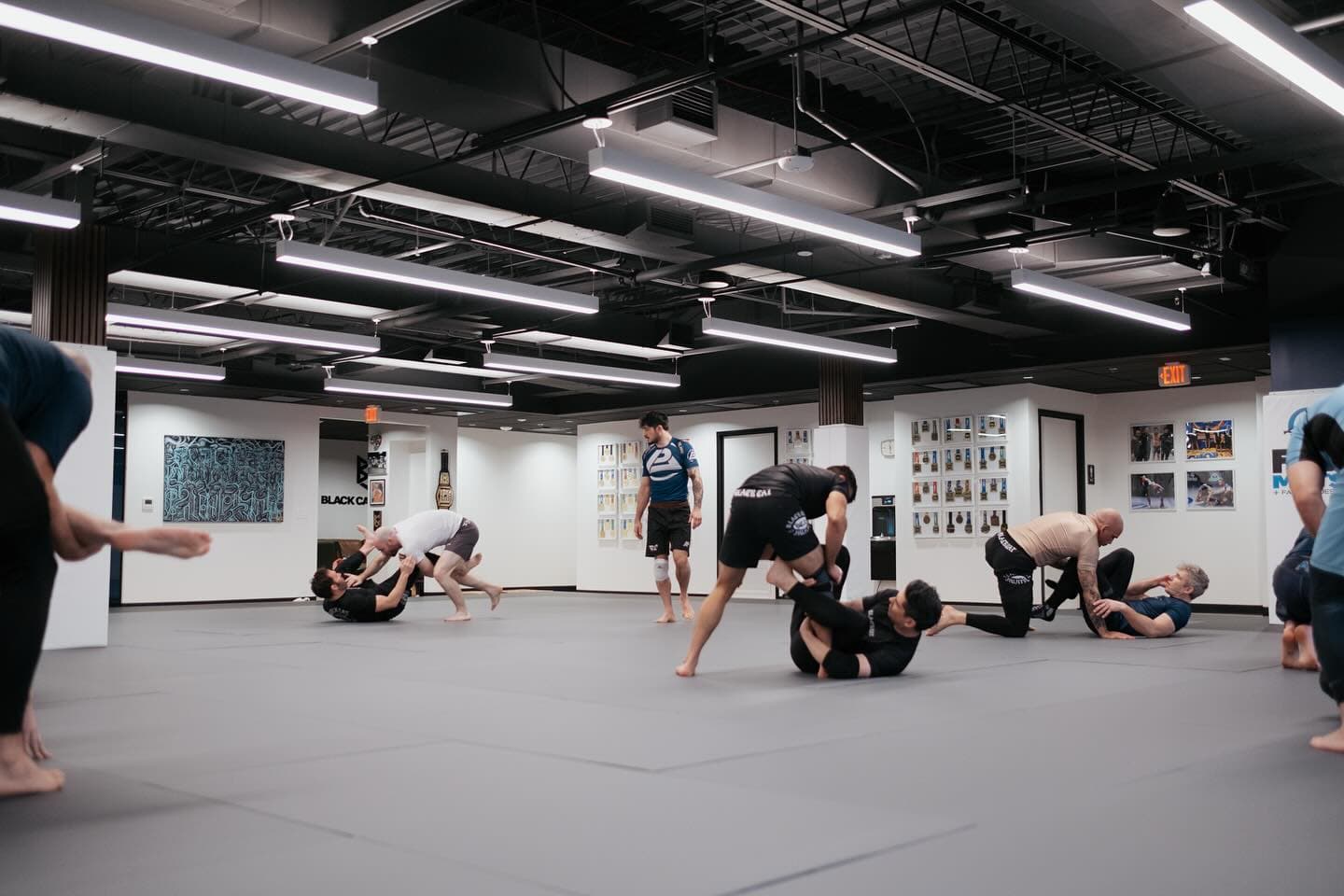
Yes, BJJ can be a demanding full-body workout. A class may combine repeated movement, technique practice, resistance, and live rounds. The work can challenge your breathing, grip, legs, trunk, and coordination, but the actual demand changes with the class, partner, round length, experience, size, and pace.
Why BJJ can feel like a full-body workout
Common movements include pushing, pulling, framing, bridging, standing up, and controlling your body while a partner adds resistance. Drilling repeats a movement. Live rounds add decisions and changing pressure. You are not isolating one muscle or moving at one steady pace.
A systematic review of BJJ athletes describes the sport as intermittent, with high-, moderate-, and low-intensity actions mixed together. It also reports aerobic and muscular demands in competitive athletes. That supports the basic description of the sport. It does not prove that every beginner class has the same intensity or that every student will get the same result.
The cardiovascular demand changes round by round
A technical drill with a cooperative partner is different from a live round against resistance. A round spent defending pressure may also feel different from one with more movement. Rest, partner size, experience, and the coach's format all change how hard your heart and lungs work.
That variation is why a single calorie number for “one hour of BJJ” is not credible. A watch can estimate your own session, but it cannot turn every class into the same workout.
The strength work is mostly repeated control
Gripping, framing, holding posture, bridging, and returning to your feet can create repeated muscular effort. The demand is usually closer to strength endurance and position-specific control than a planned maximal-strength session.
If your goal is to raise a specific lift or follow a complete strength program, BJJ is not a precise replacement. You may need separate strength work built for that goal. The strength training for BJJ guide explains how that work can fit alongside time on the mat. The right mix depends on what you want and what you can recover from.
The skill load is part of the workout
BJJ asks you to solve a physical problem while you move: keep a position, escape, control a grip, or finish a sequence against resistance. Some people prefer that learning task to exercise built around counting repetitions. It does not make BJJ automatically better than lifting, running, swimming, or another activity you will actually keep doing.
Why the workload varies
A normal class may include instruction, drilling, and live practice, but the mix is not universal. The coach may also change the session based on the group. Ask what the class you are considering includes, then judge the workload you actually experience rather than the hardest clip you have seen online.
How often should a beginner train?
Start with a schedule you can recover from and repeat. The right number depends on your training history, other exercise, sleep, prior injuries, and the actual class intensity. Ask the coach what new students commonly attend, then adjust from your own recovery instead of copying a competitor's routine.
Your first month gives you useful information. Notice how you feel during the next day, whether soreness resolves, and whether the schedule is realistic around work and family. Consistency is only useful when the workload is sustainable.
What BJJ does not replace
BJJ doesn't guarantee weight loss, strength gains, mobility, stress relief, or a medical result. It may leave gaps that another activity serves better. Someone training for maximal strength needs work designed for maximal strength. Someone managing an illness, injury, or persistent pain needs advice suited to that condition.
Weight loss requires more than a class
Physical activity contributes to energy use, but body-weight change depends on more than one workout. The CDC explains that activity and food intake work together in weight loss, and the amount of activity needed varies by person. Its broader weight-management guidance also includes sleep, stress, health conditions, medicines, age, and other factors.
That means BJJ can be part of a weight-management plan, but no honest article can promise a number of pounds or a date. If weight change is a medical concern, take it to the appropriate health professional.
Recovery is part of the decision
Grappling includes contact, resistance, and load on muscles and joints. More sessions are not automatically better. Stop if something feels wrong, tell the coach what happened, and seek appropriate medical guidance when needed. For the evidence on injury risk and prevention limits, read is BJJ dangerous.
What Black Cat membership includes
One adult membership includes gi BJJ, no-gi, wrestling, and the women's program. Exact prices and membership terms come from staff.
Try the actual class
A page cannot tell you how a class will feel in your body. Read the first-month guide, then request a trial class. Staff will contact you to confirm the class at Black Cat's academy in Springfield, Virginia. Try the actual session, recover from it, and judge whether it is work you want to repeat.