Good first-class etiquette is simple: arrive with enough time to check in, bring clean fitted training clothes, trim your nails, remove jewelry, keep shoes off the mat, listen during instruction, and tap clearly. You don't need to know the sport before you walk in.
The exact gear depends on whether the class uses a gi or no-gi clothing. Confirm that with Black Cat before the trial instead of buying equipment from a generic checklist.
What should I wear to my first BJJ class?
For a no-gi class, the conservative default is fitted athletic clothing without zippers, pockets, belt loops, or hard pieces that can catch a finger or scratch a partner. For a gi class, ask whether you need your own uniform and what the gym accepts.
The IBJJF uniform page lists competition requirements for gi and no-gi uniforms. A first class is not a tournament inspection, but the page gives a useful picture of why clean, intact, close-fitting gear matters. Black Cat's instructions for your class are the ones to follow.
What should I bring?
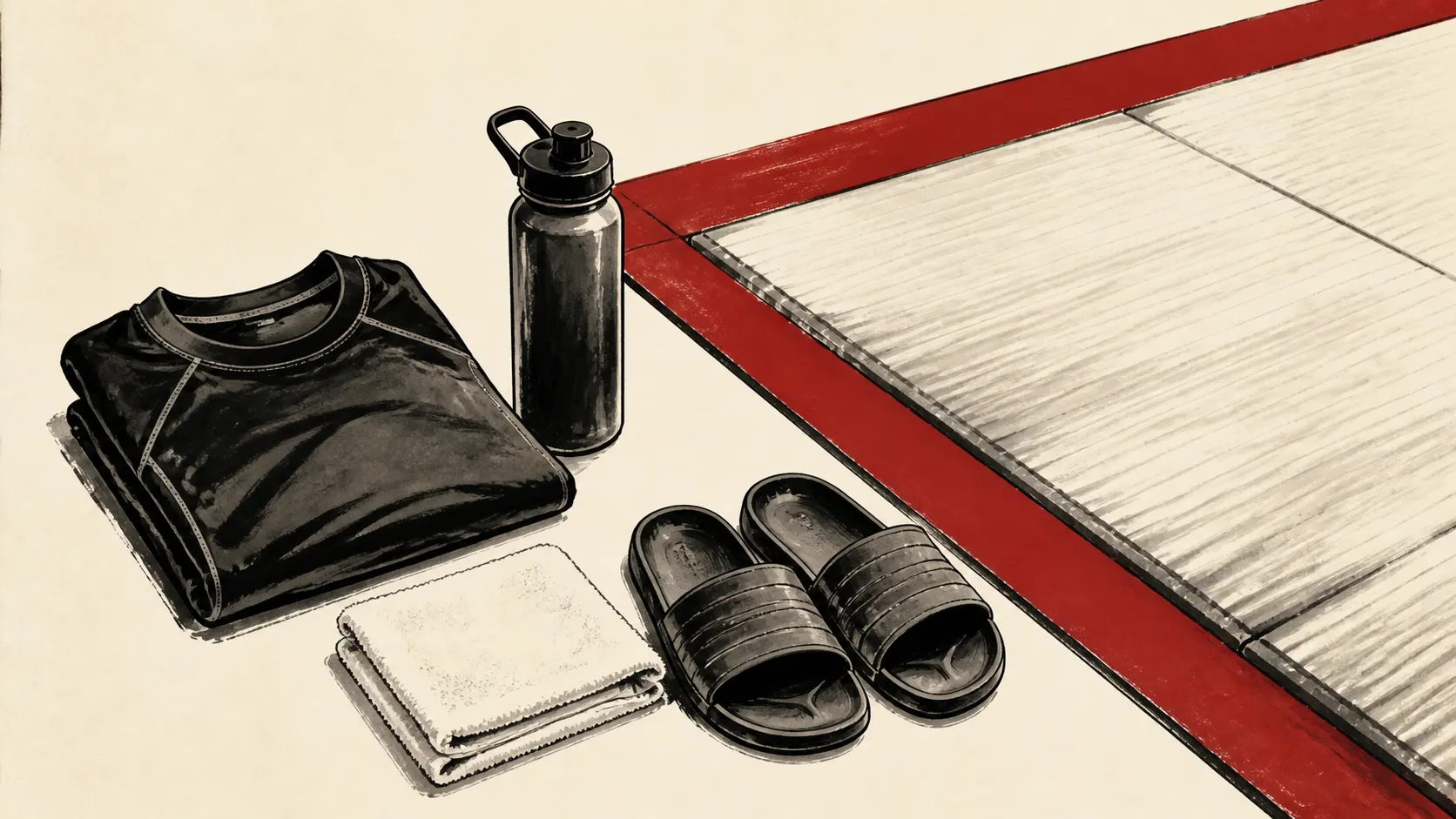
- Water: bring a bottle you can keep near the edge of the training area.
- Sandals or slip-on shoes: use them when you leave the mat for the restroom or lobby.
- Clean training clothes: pack them in a separate bag after class.
- A towel and basic toiletries: useful if you plan to clean up before leaving.
Do not assume the gym lends gloves, a gi, or any other gear. Ask when you arrange the trial. The gi versus no-gi guide explains what changes between the two formats.
Trim nails and remove jewelry
Keep fingernails and toenails short and smooth. Remove rings, watches, necklaces, earrings, and other jewelry before stepping on the mat. These small steps protect both you and the person gripping or moving beside you.
Come in clean gear. Do not reuse an unwashed shirt or uniform from the last session. If you have a possible contagious skin issue or open wound you cannot cover securely, stay off the mat and ask the gym what it requires before returning.
Keep shoes off the mat and wear them off the mat
Training mats are a barefoot surface. Leave outdoor shoes at the edge, and put on sandals when you walk into the restroom or another off-mat area. The rule works in both directions: no shoes on the mat, no bare feet in the restroom.
How do I tap?
Tap your partner several times with a hand when you can. If your hands are trapped, tap with a foot or say "tap" in a clear voice. Do not wait for pain, and do not whisper the signal.
When a partner taps, let go and give them space to reset. A tap closes that exchange. There is no extra squeeze, argument, or attempt to finish the movement after the signal. Read more about the training boundary in our guide to BJJ risk and tapping.
Drilling is practice, not a contest
During instruction, watch the full demonstration before trying the movement. In drilling, give your partner the reaction the coach asked for. Adding surprise resistance, a different escape, or extra speed can stop both people from learning the step being taught.
Questions are welcome when they help you complete the task. Ask what grip you missed, where your weight should go, or what the next step is. You do not need to invent a more advanced version on day one.
How hard should I go in live training?
Follow the instructor's format and tell your partner you are new. You can give real resistance without exploding through every position. If the pace feels wrong, pause, tap, or ask the coach for help. A round is shared work, not a test you have to pass.
Arrive ready to listen
Give yourself enough time to find the entrance, check in, change, and hear the first instruction. Exact arrival and class times can change, so confirm them with the gym when you book rather than relying on an old article.
If you want the bigger picture, read what the first month of BJJ feels like and see the adult BJJ program. When you are ready, contact Black Cat about a trial and ask what to wear for that specific class.
Can I wear shorts and a T-shirt to my first BJJ class?
Ask the gym which class you are joining. For no-gi, fitted athletic clothes without zippers, pockets, or hard parts are the conservative default. A gi class may require a uniform, so confirm before buying or bringing one.
Do I need to know how to tap before class?
No. The instructor should explain it, but the signal is simple: tap your partner with a hand or foot several times, or say "tap" clearly. Use it before pain and stop immediately when your partner taps.
Can I ask questions during a BJJ class?
Yes. Ask a short question about the movement or instruction in front of you. If the answer needs more time, the coach may return to it after the group starts drilling.