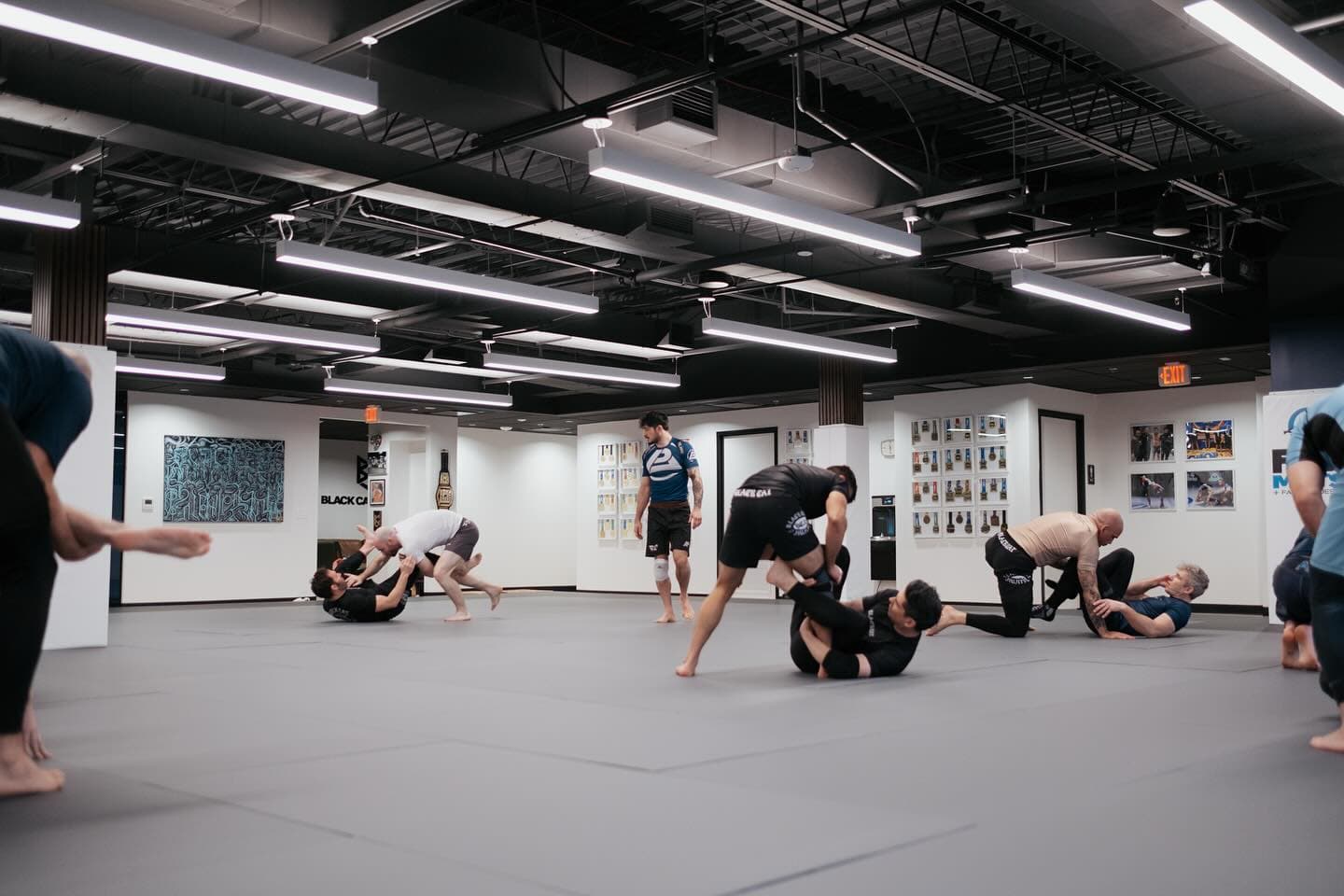
Brazilian jiu jitsu, often shortened to BJJ, is a grappling art built around controlling another person and using submissions to end an exchange. Instead of trading punches or kicks, you learn how to manage distance, improve position, escape bad spots, and apply chokes or joint locks with control.
The simple idea is this: position gives you control, and control gives you options. That is why a beginner spends as much time learning how to escape as learning how to attack.
How does Brazilian jiu jitsu work?
BJJ starts standing, but much of the training happens on the ground. One person may try to complete a takedown, while the other tries to stay standing, counter, or establish guard after the action reaches the mat.
From there, both people work through recognizable positions:
- Guard: the person on the bottom uses the legs and grips to manage distance, sweep, stand up, or attack.
- Side control: the top person controls across the torso while the bottom person frames and works to recover space.
- Mount: the top person sits over the torso while the bottom person protects and escapes.
- Back control: one person controls from behind, usually with the legs and upper-body grips.
A submission ends the exchange when a person taps. In training, the tap is a stop signal, not a defeat to argue about. That agreement lets both partners practice against real resistance while keeping control of the pace.
What happens in a BJJ class?
A typical class has three parts: a warm-up or movement block, instruction and drilling, then live positional work or rounds. The exact mix changes by class, but the learning loop stays the same. You see a movement, practice it with a partner, then test part of it against resistance.
You aren't expected to know the positions on day one. A useful first class is one where you learn the room, practice a few movements, understand how to tap, and leave with a clearer picture than you had when you walked in. Our first-month guide explains what that early learning curve feels like.
What is the difference between gi and no-gi BJJ?
Gi BJJ uses a jacket and pants that can be gripped. No-gi uses fitted athletic clothing and does not allow clothing grips. The positions and submission logic overlap, while the grips and pace can feel different.
Neither format is the one correct starting point for every person. The better choice is the class you can attend consistently and enjoy learning. Read the full gi versus no-gi comparison, or see Black Cat's no-gi program.
Is BJJ the same as wrestling?
No. Both are grappling sports, and both use stance, takedowns, pressure, and control. Wrestling puts more emphasis on takedowns, pins, and staying off your back. BJJ lets the bottom player use guard and allows submissions, which changes the decisions on the ground.
The two styles can strengthen each other. Black Cat has a separate wrestling program, and our guide to wrestling for BJJ explains where the skills transfer.
Do you have to compete?
No. Competition is one way to test BJJ, not the reason every person trains. People also come for a demanding hobby, structured learning, practical grappling skill, or a regular room where they can work hard with other adults.
If you do compete, rules matter. The current IBJJF rule book defines scoring, legal techniques, and match procedures for its events. Those competition details should not be confused with the full purpose of an ordinary class.
Can kids and complete beginners learn BJJ?
Yes. The material can be taught in smaller steps, with partners and intensity matched to the class. Adults can start through the adult BJJ program, while younger students have a separate kids program. A good first goal is not to win rounds. It is to learn the basic positions, tap clearly, and become a reliable partner.
Try the art instead of guessing from the name
BJJ makes more sense once you feel how framing, balance, and control work against another person. If you are in Springfield or Northern Virginia, contact Black Cat about a trial. Tell the team it is your first class and they will confirm the right starting point and what to bring.
What does Brazilian jiu jitsu teach?
It teaches you to control distance and position, escape bad spots, and apply submissions with a partner who can resist. Training also teaches the practical habits of tapping, resetting, and working at a pace both partners can manage.
Does BJJ use punches or kicks?
Standard BJJ training does not center on punches or kicks. It focuses on takedowns, clinch and ground control, escapes, sweeps, and submissions. That makes it a grappling art rather than a striking art.
Can I start BJJ with no experience?
Yes. Beginners are not expected to arrive knowing the positions or vocabulary. Your first job is to listen, practice the movement in front of you, tap when needed, and ask when an instruction is unclear.