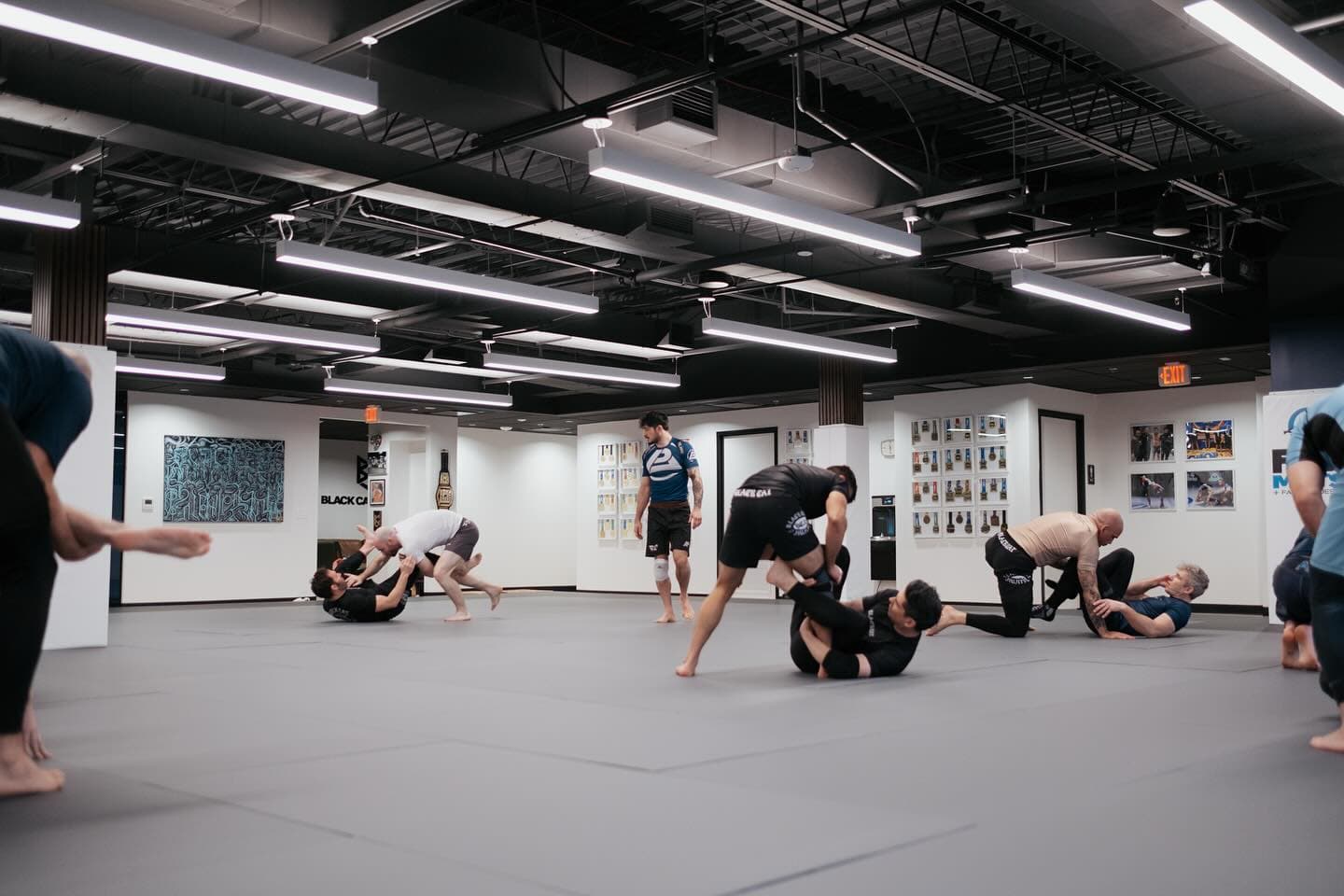
You can start Brazilian jiu jitsu after 40. The honest version is not that age stops mattering. It is that pace, partner choice, recovery, and consistency matter more than trying to train like the youngest person in the room.
BJJ is a skill practice before it is a toughness test. A later start works best when you protect the next month of training instead of trying to prove everything in the first round.
Am I too old to start BJJ?
There is no single birthday that answers that question for everyone. Training history, current health, work demands, sleep, and prior injuries all change the picture. A gym can explain how its classes run, but it cannot diagnose whether training is medically appropriate for you.
If you have a health condition, a recent injury, or a specific concern about exercise, get advice from a qualified health professional who knows your situation. On the mat, tell the instructor about relevant limitations before class starts so the coach can explain what the class can and cannot adjust.
Start slower than your excitement wants to
The first few classes create a strong temptation to do too much. Every movement is new, and effort can hide the fact that you do not yet know where to place your weight or when to relax. More force does not solve that gap.
The CDC's general getting-started guidance says to start slowly and work up to more time or more challenging activity. It does not clear anyone for BJJ or remove the risks of contact training. Begin with a workload you can repeat, then adjust based on your recovery and individual medical advice when needed.
Choose partners who can control the round
A useful partner gives you real resistance without turning every exchange into a collision. Ask the instructor who would be a good match. Before the round, it is fine to say you are new, you want a controlled pace, or you are protecting a specific area.
You can also decline a round. That isn't rude. Good training requires consent from both people, and a partner mismatch is easier to prevent than to solve after the pace has already jumped.
Tap early and make the signal obvious
You do not need to wait for pain. Tap with your hand, your foot, or your voice as soon as you know you are caught or feel unsafe. Your partner should release when the signal happens. Resetting early gives you another chance to learn the position instead of turning a normal round into a test of pain tolerance.
Our article on BJJ risk and the role of the tap covers this boundary in more detail without pretending any contact sport is risk-free.
Recovery is part of the training plan
Pay attention to how you feel during class and in the days after it. The goal is to find a training rhythm that fits your actual work, sleep, family, and recovery, not a number copied from someone else's schedule.
Technique work still counts when you are not trying to win every exchange. Slow drilling, positional rounds, and asking a precise question can teach more than one frantic round. If something hurts, stop and assess it rather than using an article as a diagnosis.
What should the first month look like?
Expect the positions and names to blur together at first. Pick a small set of jobs: protect yourself, recognize guard and mount, frame before pushing, and tap clearly. You do not need a personal game plan yet.
The complete BJJ first-month guide explains the learning curve, and the adult program page shows where that training lives at Black Cat.
Try one controlled class
The useful question is not whether every person over 40 should train. It is whether the class, pace, and room fit you. Contact Black Cat about a trial, mention that you are new, and ask the team what to wear and which class is the right starting point.
Is 40 too old to start Brazilian jiu jitsu?
No single age answers that for everyone. Many adults begin later, but current health, prior injuries, and recovery needs still matter. Start at a repeatable pace, communicate with the instructor, and get medical advice for individual health concerns.
How often should a BJJ beginner over 40 train?
There is no universal number. Start with a workload that fits your recovery and responsibilities, then adjust from what your body and schedule actually show you. Consistent, controlled practice is more useful than copying someone else's frequency.
How do I lower the pace in a BJJ round?
Tell the partner you are new and want a controlled round. Ask the instructor for a suitable partner, tap early, and decline a round when the match or pace does not feel right. Both people must agree to the exchange.